Dominique Savitri Bonarjee
Embodied practices, sound, scores and ritual at the confluence of art, technology and spiritual intuition
SELECTED WORK


The Crochet Resistance Suit


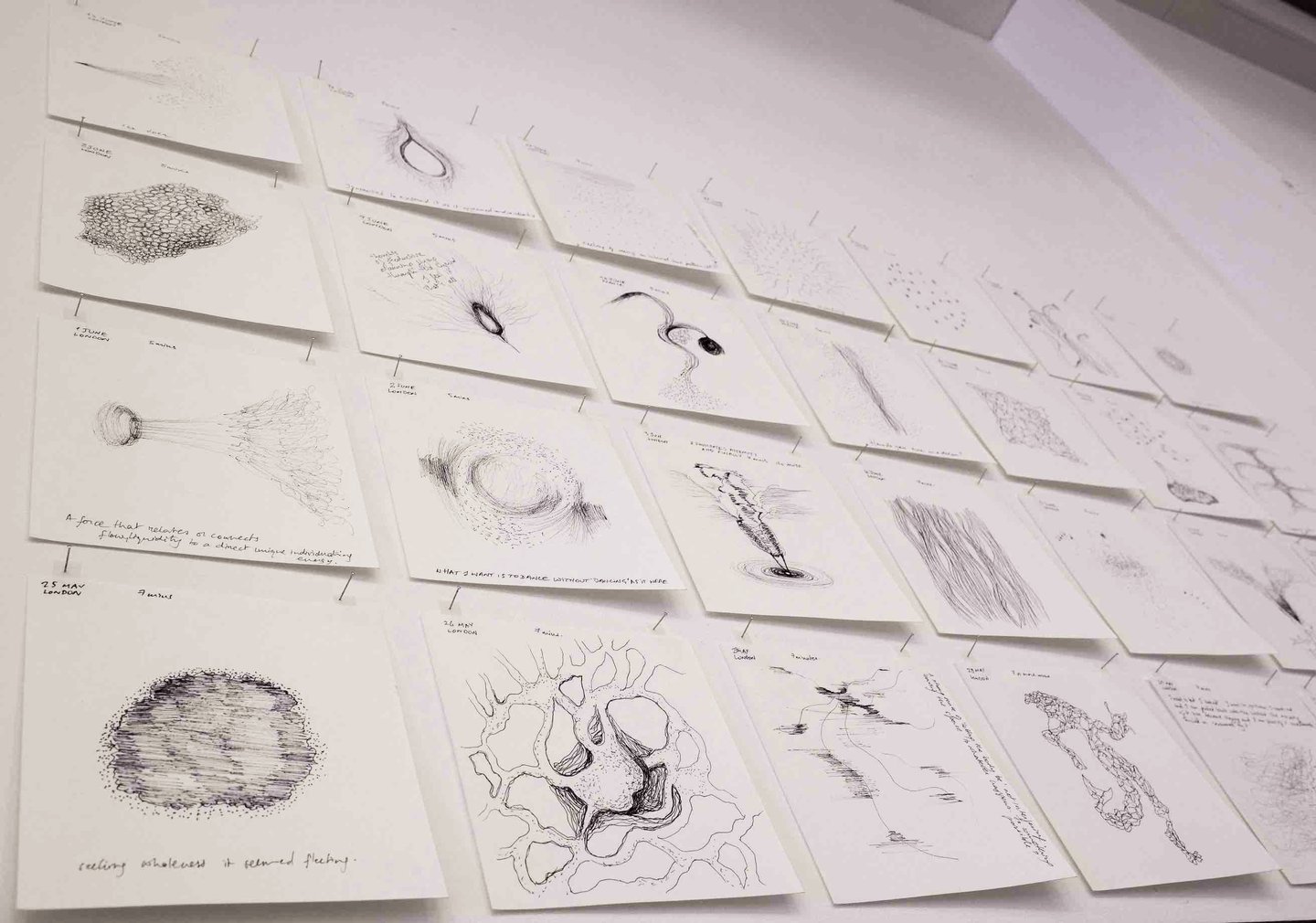
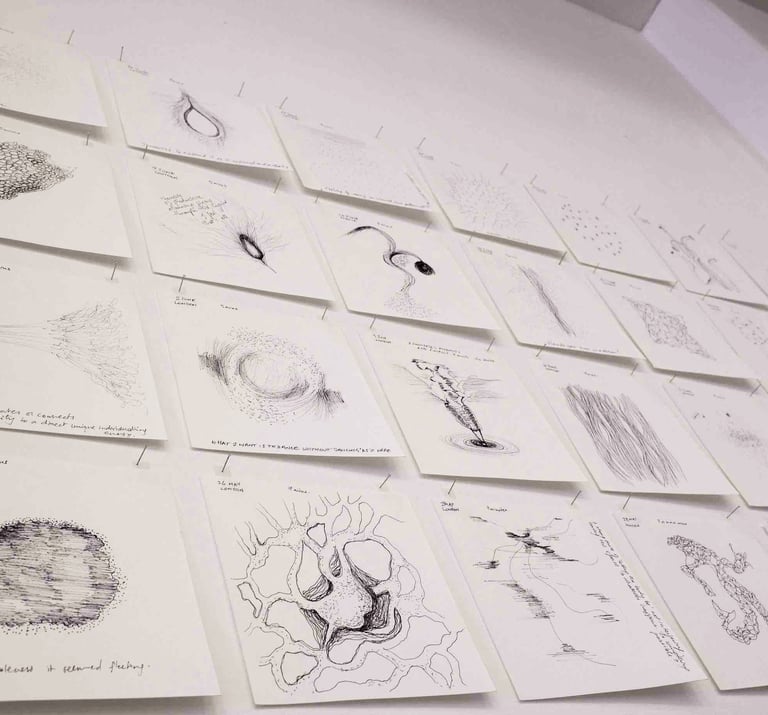
Scores for Unknowing
Choreography, AI voice, sound composition


Butoh Mutations
| artist, dancer, author

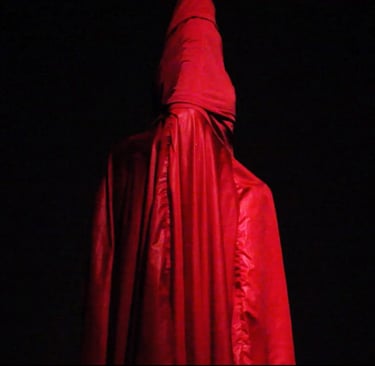
The artistic focus of Space of the Nameless is in testing how psycho-physical practices can make embodied knowledge and energetic states perceptible and accessible. Read more about this in my artist statement.
Transformation, transduction, and transmission are words that describe the movement of energy—its capacity to change state, to pass through different materials and bodies, and to reveal forms of spontaneous knowing. Energy never disappears, it changes state. This same principle of perpetual energy can be encountered in numerous wisdom traditions. My research in this field guides my practice, and my thinking in imagining counterpoints to systems of labour that seek to enclose and commodify the energy of living beings.
Similarly my artworks operate as a continuum: they interpenetrate each other endlessly. This means, they don't easily adhere to being ordered by project or medium, I use the triad of Tantra (embodied practice), Mantra (sonic exploration), and Yantra (visual scores and diagrams) to orient visitors through my multi-faceted works.
.Can you listen to your waters as you navigate energy's perpetual transformations?
The Mind Rave is an immersive experience created through dance, a live electronic soundscape, public participation and the interaction of various objects in space. The public is compelled to partake through objects that can be activated during the performance: cylindrical head pieces (carefully worn as ‘attention cocoons’), turquoise scented jelly (to be held in a handful) and broken mirrors (used to direct the light onto the performance stage). The experience generates a ritualistic and meditative space where the participants lose themselves in time. The impermanent installation galvanises a space of heightened yet soft haptic sensoriality, which can never be repeated a second time: each experience is unique to the specific iteration.
Giulia Casalini (curator)
“…it was a remembering but not in [an] easy woolly domestic way, [but] as in a remembering of the wild, terrifying and beautiful core of the universe, like a de-construction of everything that individuates - a calling to a home that is vast and unknowable.”
Sophie Hughes
(artist & curator)
[COLLAPSE, London] felt like such a privilege to witness that aching and beautiful act of collective grieving (which is one of the many wonderful things I think it felt like).
In amongst the collective there were all the very individual expressions of exhaustion and the vulnerability was sad, beautiful and made me feel angry and protective.
Collapse, yes but I also felt some comfort in the rest it promised after.
Passers by were very into it. A German tourist mum was suggesting to her children it was the “stress of the world” another guy was saying how sad it was (in a complimentary way) and another man who I think worked in the building was really delighted by it and kept exclaiming “Why not?!”
Nick Kaplony (artist)